Healthcare perspective / 7 April 2026
The Silver Tsunami: Navigating the Longevity Revolution in the First World
How population ageing is changing healthcare demand, and why connected services and adaptable capacity matter alongside hospital investment.
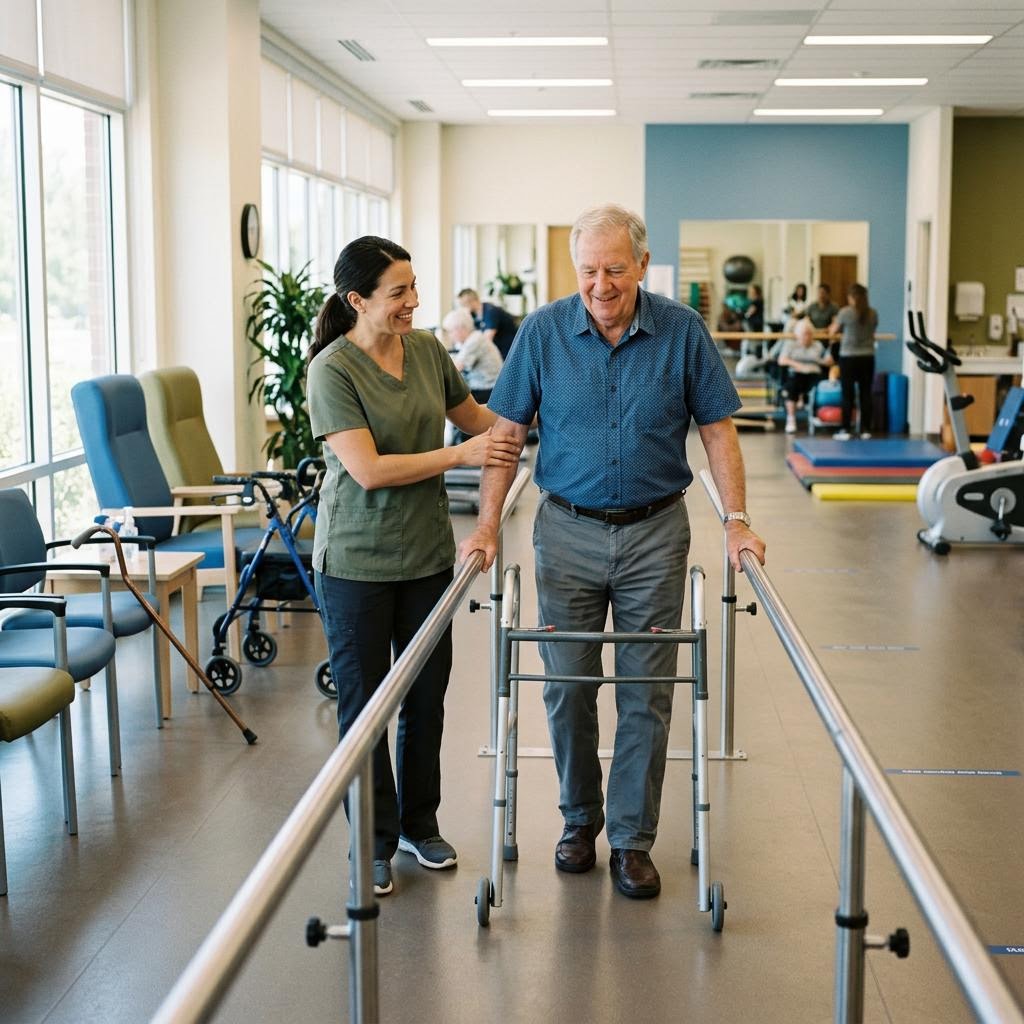
In the 21st century, the most profound demographic shift is not a spike in birth rates, but the unprecedented extension of life. In many first-world countries from Japan and Italy to Australia and the United States we are witnessing a “Longevity Revolution.” For the first time in human history, people aged 65 and older will soon outnumber children under five. While this is a triumph of public health and medical science, it presents a seismic challenge to the structural integrity of both healthcare and aged care systems.
The Multi-Morbidity Challenge
Living longer does not always equate to living in peak health. As life expectancy pushes toward the late 80s and 90s, the clinical profile of the average patient has fundamentally changed. We are moving away from an era of “acute” medicine where a patient enters a hospital with a single, fixable problem to an era of multi-morbidity.
The modern elderly patient often manages a complex cocktail of chronic conditions: Type 2 diabetes, cardiovascular disease, osteoarthritis, and varying stages of cognitive decline. For healthcare services, this means the traditional “episodic” model of care is broken. A hospital designed for 24-hour stays and rapid discharges is ill-equipped for a patient whose recovery is slowed by frailty and whose medications must be balanced with extreme precision to avoid adverse interactions.
The Dementia Crisis and Aged Care
Perhaps the most significant impact of the longevity explosion is the rising prevalence of dementia. As age is the primary risk factor, aged care services are being forced to transform from “hospitality-style” retirement living into specialized clinical hubs.
This shift has created a massive infrastructure gap. Many existing aged care facilities were designed for “low-care” residents who required minor assistance with daily living. Today, those same facilities are housing residents with high-level clinical needs and complex behavioral symptoms associated with neurocognitive disorders. The strain on the workforce is immense; we are asking aged care workers to perform roles that increasingly mirror acute psychogeriatric nursing, often without the corresponding resources or ratios.
The Economic and Workforce Strain
The “ Old-Age Dependency Ratio” the number of working-age people available to support every retiree is shrinking. This creates a dual crisis: a diminishing tax base to fund universal healthcare and a shrinking labor pool to staff the wards and care homes.
To survive, first-world countries must pivot toward preventative longevity. This involves investing in “Healthy Aging” i nitiatives decades before a person reaches retirement. By focusing on bone density, cognitive reserve, and metabolic health in mid-life, we can compress “morbidity” ensuring that while people live longer, the period of time they spend in a state of high-dependency is shortened.
The Solution: Integrated Ecosystems
The siloed nature of “Healthcare”(hospitals) and “Aged Care” (residential facilities) is no longer sustainable. The future requires a seamless ecosystem where geriatricians, general practitioners, and aged care leads operate under a single clinical governance framework. We need “Hospital-in-the-Home” models that prevent the trauma of unnecessary ED presentations for the elderly and digital monitoring systems that catch deterioration before it becomes a catastrophe.
The new future
The explosion of age is not a problem to be solved, but a new reality to be managed. At Urban Healthcare, we recognize that the longevity revolution requires more than just more beds; it requires a complete redesign of the clinical journey.
We must build systems that respect the dignity of age while acknowledging the clinical complexity that comes with it. The goal is no longer just to add years to life, but to ensure our systems are robust enough to add life to those years.