Demographic demand modelling
Population, catchment and utilisation analysis translated into projected demand by service, location and time horizon.
EnquirePrecinct and system design sits on demographic, catchment and demand analysis. From there we support clinical planning, the investment case, delivery, transition and ongoing assurance.

Urban Healthcare turns demographic evidence into healthcare precincts, health systems and services that fit the communities they serve. Population, catchment and demand analysis come before any design decision.
Who lives in the catchment now, and who will in future: age profile, growth, cultural mix and socio-economic context.
Where people live in relation to existing services, how they travel, and where they currently seek care.
Population and utilisation translated into projected demand, capacity and workforce, by service and over time.
Precincts, networks and service models sized and sequenced to that demand, then tested with clinicians.
Illustrative catchment model. Rings show how analysis separates the community a precinct serves directly from the wider region.
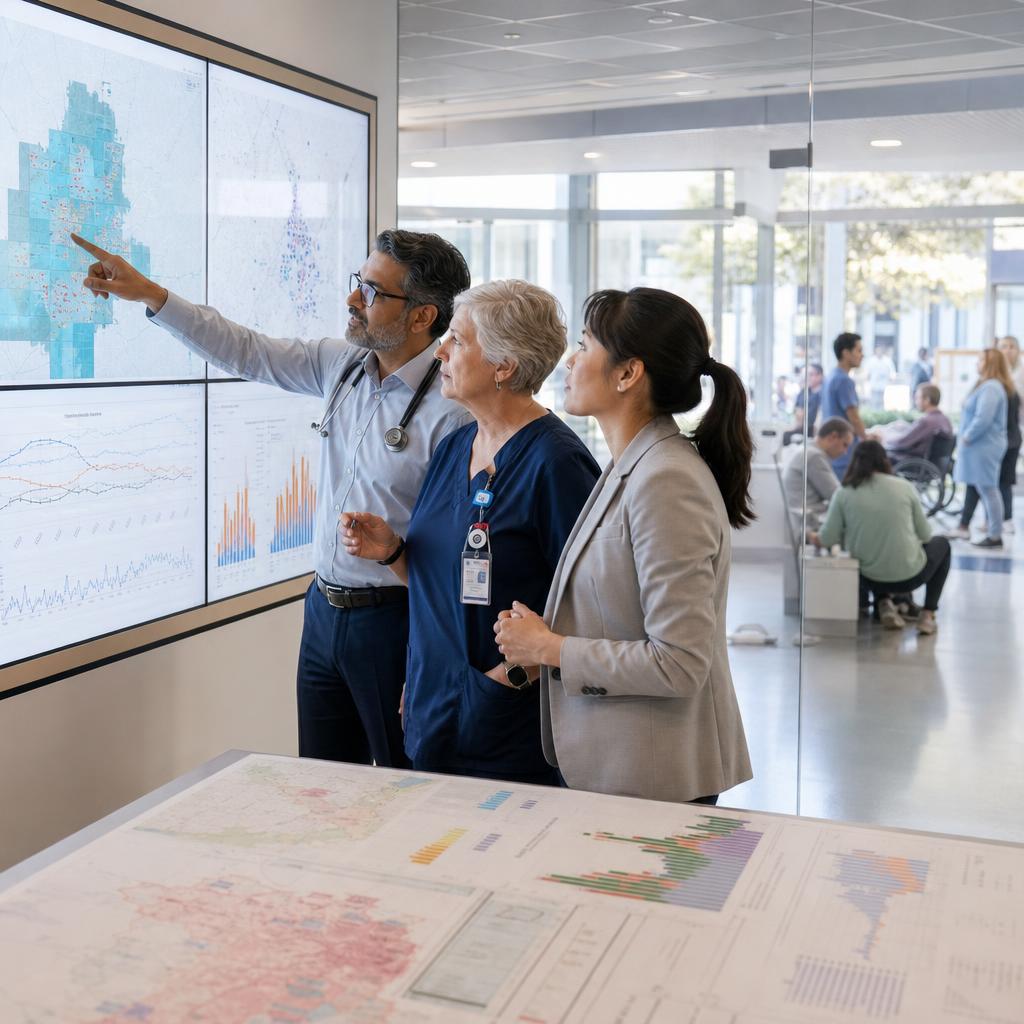
We model how a community is likely to use healthcare, by service and location, and what capacity and workforce that implies. The same evidence base then informs the precinct plan, the clinical brief and the business case, so each decision traces back to the people being served.
Demographic demand modellingEvery sound plan starts with who needs care, where they live and how demand will change.
Population, catchment and utilisation analysis translated into projected demand by service, location and time horizon.
EnquireBeds, procedural capacity, clinical spaces and the workforce needed to staff them, tested against projected demand.
EnquirePrecincts, networks and services shaped to the evidence and the clinical intent.
Roles, relationships and sequencing for hospitals, community services and enabling uses within a precinct or network.
EnquireService by service clinical briefs that set out what each facility must do, ahead of design.
EnquireGovernance, workflows, staffing and partnerships that let a service model work day to day.
EnquireClinical requirements, facility planning and equipment needs integrated with the precinct and project design team.
EnquireOptions, clinical models and implementation steps for care that reaches beyond the facility.
EnquireWhere emerging technology fits the service model, what it requires, and how to adopt it responsibly.
EnquirePlanning for imaging, pathology and laboratory services across a facility, precinct or network.
EnquireLogistics, stock and distribution arrangements that keep services supplied and resilient.
EnquireClear options and sound reasoning for those who must decide.
Keeping a complex program coordinated from approval to first patient and beyond.
Planning, reporting and control of healthcare projects and programs, including program management offices.
EnquirePreparing services, people and equipment to open and operate in a new setting.
EnquireWorking alongside local teams so capability stays with the organisation.
EnquireIndependent views on how services are governed, performing and holding up.
Each engagement connects demographic evidence, healthcare precinct and system design, delivery requirements and practical recommendations for the community it serves.
Tell us about the community, the service or the precinct you are planning for.