Healthcare perspective / 11 February 2026
The Death of the “Static” Hospital: Designing for Web 3.0 and Beyond
How adaptable hospital design and emerging digital models are changing the way healthcare facilities and connected services are planned.
The traditional healthcare development cycle is broken. In Australia, the journey from a business case to the first patient entering a new ward can span a decade or more. By the time the ribbon is cut, the “state-of-the-art” technology planned during the initial design phase is often two generations behind, and the care models it was built to support have already evolved.
At Urban Healthcare, we believe the era of the “static” hospital a rigid, concrete monument to yesterday’s medicine is over. To serve the patients of tomorrow, we must stop building for a fixed point in time and start designing for constant evolution.
The Obsolescence Trap
Historically, hospital infrastructure has been treated as a permanent shell. However, the convergence of medical science and digital technology is moving at a velocity that physical bricks and mortar cannot match. When a facility is designed with fixed walls and hard-wired systems, it becomes a literal barrier to innovation.
We are currently seeing the rise of Web 3.0 in healthcare: a shift toward decentralised data, edge computing, and highly personalised, AI-driven diagnostics. If a hospital cannot integrate real-time point-of-care testing or support a seamless “hospital-at-home” digital interface, it isn’t a Centre of Excellence it’s a legacy asset.
Flexibility: The New Cornerstone
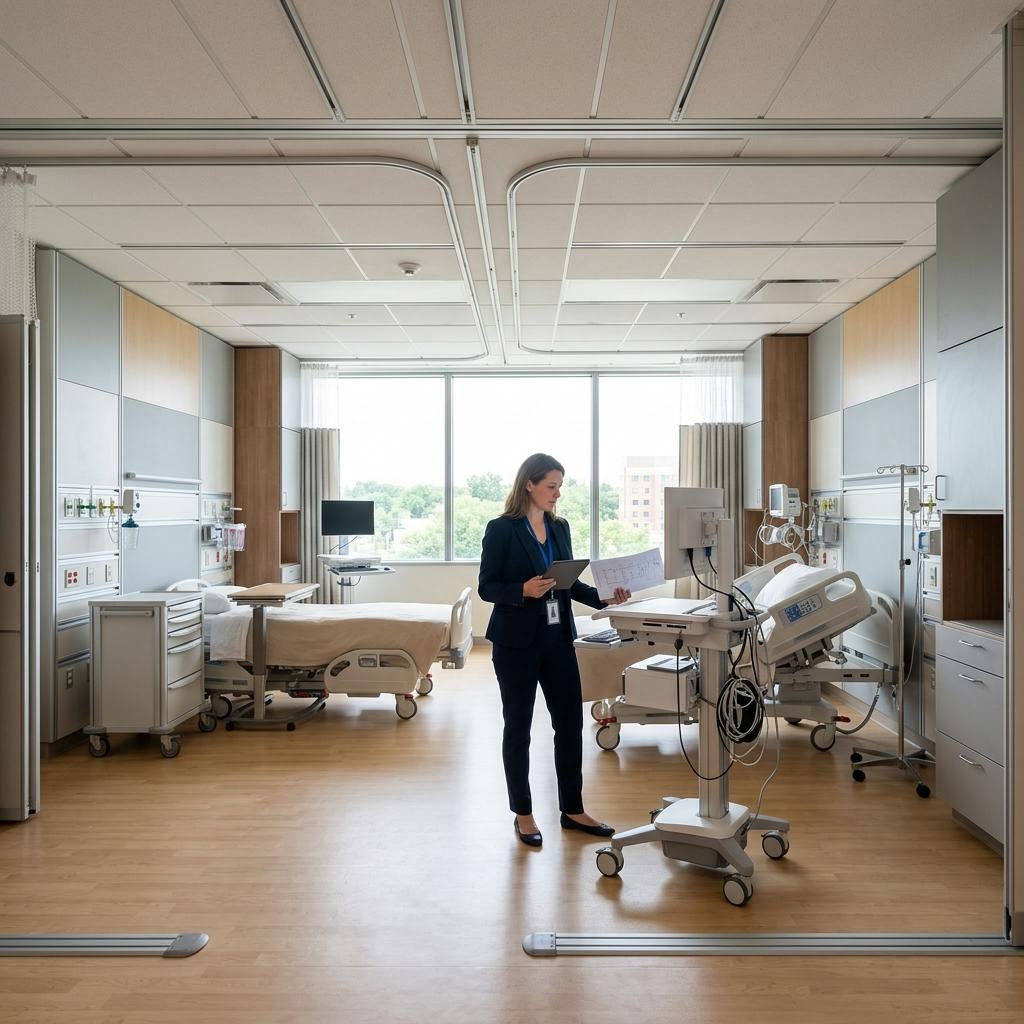
Our approach at Urban Healthcare prioritises Future-Ready Design. This means moving away from bespoke, locked-in room functions toward modular infrastructure. By utilising standardised components and flexible “soft spaces” that can be repurposed without major structural intervention, we ensure that a surgical suite today can become a high-tech diagnostic hub tomorrow.
Key elements of this “living building” framework include:
- Plug-and-Play Digital Backbones: Designing IT infrastructure that can scale to handle the massive data loads of genomic medicine and AI imaging. - Agnostic Clinical Spaces: Creating universal rooms that adapt to changing patient acuities. - Hybrid Care Integration: Ensuring physical assets are designed specifically to act as the “command centre” for virtual wards and remote monitoring.
The Urban Healthcare Methodology
Our value lies in the “Pre-Design” phase. We don’t just plan buildings; we plan health service outcomes. Our methodology involves integrating modern medical knowledge and emerging care trends into the very first strategic sessions.
We work with clinicians and stakeholders to stress-test designs against future scenarios:
_How does this ward function if 40% of patients are treated virtually?_
_How does the pharmacy layout change with automated drone delivery?_
By embedding this foresight into the planning process, Urban Healthcare prevents the delivery of outdated facilities. We help our clients build infrastructure that doesn’t just house medicine but accelerates it creating true Centres of Excellence that remain relevant for decades, not just until opening day.
* * *