Healthcare perspective / 3 March 2026
Beyond the Spreadsheet: Real-World Efficiency in Hospital Operations
Why hospital efficiency depends on understanding real clinical workflows, logistics and service delivery—not just the numbers in a spreadsheet.
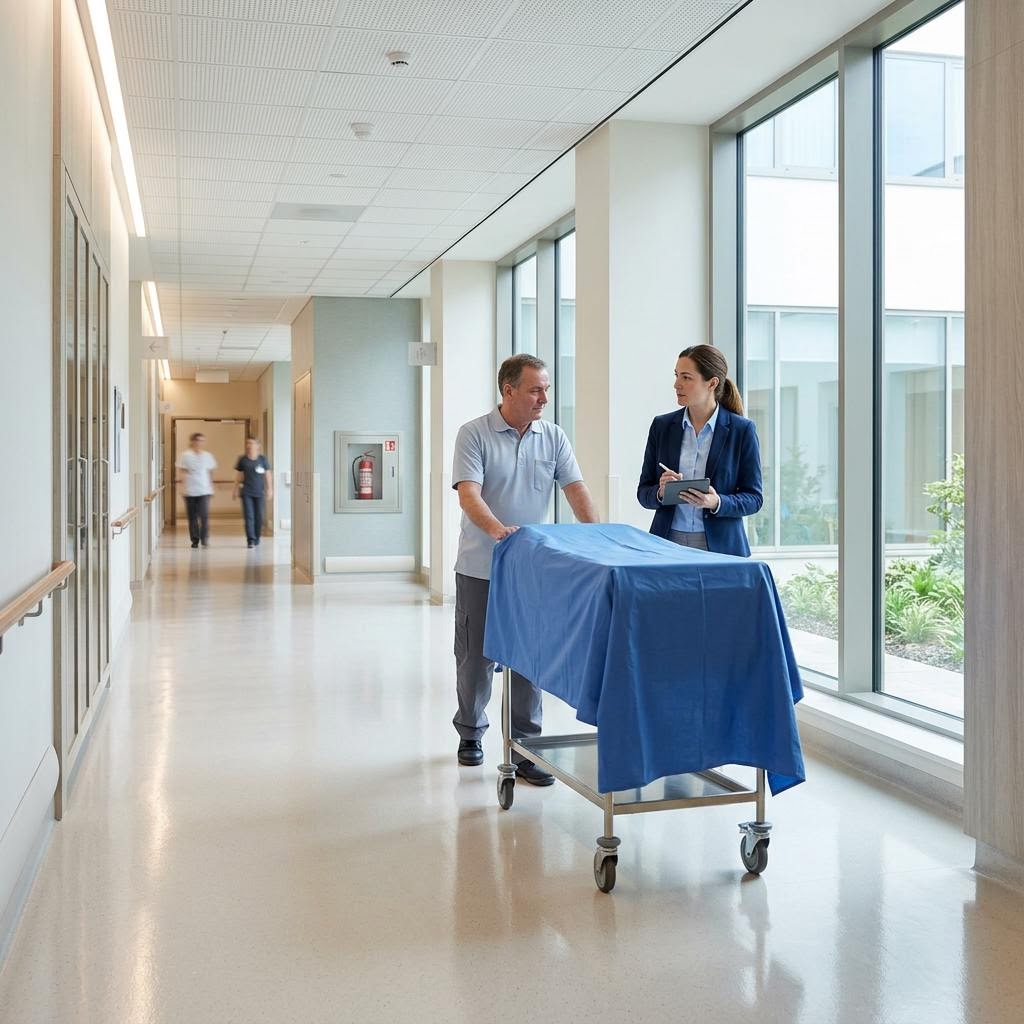
In the high-stakes environment of acute care, “efficiency” is often a misunderstood word. To a Chief Financial Officer, it might look like a balanced ledger; to a frontline clinician, it often feels like being asked to do more with less. At Urban Healthcare, we challenge both perspectives. Real-world operational excellence isn’t about cutting costs until the system bleeds it’s about optimizing flow so that the system breathes.
The Myth of the Linear Hospital
Traditional efficiency models, like Lean manufacturing, were designed for assembly lines where every input is predictable. But a hospital is not a factory. In an Emergency Department (ED), you cannot schedule a multi-vehicle trauma or a sudden flu outbreak. When “Standard Lean” meets the unpredictable nature of acute care, it often fails because it lacks clinical elasticity.
Operational excellence in healthcare requires a hybrid approach. We look beyond the spreadsheet to find the “hidden” waste that data points often miss. This isn’t just about the cost of gauze; it’s about the time-waste in surgical throughput the thirty minutes a theatre sits empty because a patient transport was delayed, or the four hours a bed remains “occupied” on paper simply because a discharge summary hasn’t been signed.
Hunting for ‘Hidden’ Waste
Our methodology focuses on the “intersections” of care. We recently worked with a major metropolitan health system struggling with bed block. By moving out of the executive suite and onto the wards, we identified that the primary bottleneck wasn’t a lack of beds it was a breakdown in discharge planning synchronicity.
Physicians were rounding at noon, but pharmacy wasn’t receiving medication orders until 2:00 PM, leading to 5:00 PM discharges. This “dead time” meant that incoming ED patients stayed on trolleys for hours. By shifting “Discharge Rounds” to 8:00 AM and creating a dedicated “Discharge Lounge” workflow, we didn’t just move numbers; we moved people.
Tactical Success: The 20% Shift
In a recent (anonymized) engagement, a surgical center was facing a 15% cancellation rate due to “pre-op readiness” issues. The spreadsheet suggested hiring more administrative staff. Our tactical audit suggested otherwise.
We implemented a Parallel Processing Workflow. Instead of a linear chain of events, we empowered anesthesia, nursing, and surgical leads to perform checks simultaneously through a digital “cockpit” view. The result? A 20% reduction in wait times and a significant increase in theatre utilization without adding a single full-time equivalent (FTE) to the payroll.
Empowering the ‘Engine Room’
The most sustainable efficiency gains don’t come from a consultant’s stopwatch; they come from staff empowerment. We believe that the people doing the work are the best ones to fix the work.
Our role is to provide the “Engine Room” the middle management and frontline leads with the tools to identify their own bottlenecks. When a nurse sees that a redesigned equipment room saves them three miles of walking per week, they don’t just “accept” the change they own it.
The Bottom Line
Operational excellence is the byproduct of a system that respects the clinician’s time as much as the organization’s capital. When you optimize flow, the financial results follow naturally. At Urban Healthcare, we don’t just fix the spreadsheet; we fix the day-to-day reality of care delivery.